Pediatric Ophthalmology
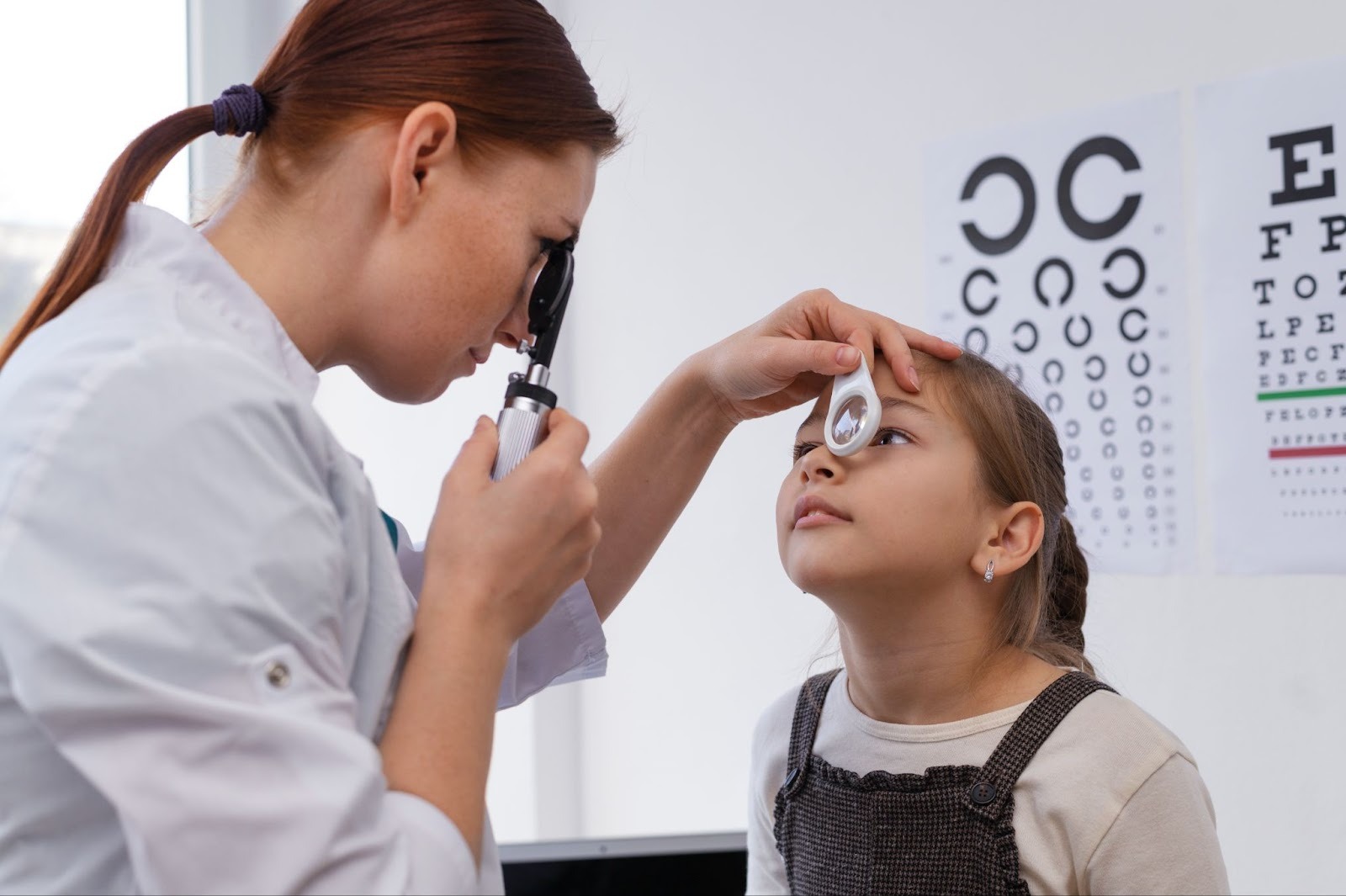
Pediatric Ophthalmology
Specialized Care for Growing Eyes and Bright Futures.
A child’s vision is their primary tool for learning and exploring the world. Unlike adults, a child’s visual system is still developing, making the first eight years of life a critical “plastic period.”
We understand that children are not just “small adults.” They require patience, specialized equipment, and a playful environment. From routine school screenings to complex squint surgeries, we are dedicated to detecting and treating issues before they permanently impact a child’s development.
Overview
The most common cause of blurred vision in children.
- Myopia (Nearsightedness): Difficulty seeing the blackboard/distance.
- Hyperopia (Farsightedness): Eye strain when reading.
- Astigmatism: Distorted or blurry vision at all distances.
Who is at Risk?
- Genetics: Parents who wear glasses are likely to have children who need them.
- Lifestyle: Excessive screen time and lack of outdoor play (linked to Myopia progression).
- Pre-term Birth: Premature babies often have higher refractive errors.
Symptoms
- Squinting: Narrowing eyes to see clearly.
- Proximity: Sitting very close to the TV or holding books close to the face.
- Headaches: Frequent complaints of forehead pain after school.
- Academic Issues: Poor handwriting or difficulty copying from the board.
Treatment Options
- Polycarbonate Glasses: Shatter-proof, lightweight lenses safe for active kids.
- Myopia Control: Special drops (Low-dose Atropine) or specific glasses to slow down number progression.
Overview
This is the #1 cause of preventable vision loss in children. It occurs when the brain favors one “strong” eye and ignores the “weak” eye. If not treated before age 7-9, the brain may permanently “switch off” the weak eye, leading to lifelong poor vision that glasses cannot fix later.
Who is at Risk?
- Unequal Powers: One eye has a high number, the other is normal (Anisometropia).
- Squint: Misaligned eyes cause the brain to ignore the deviating eye to avoid double vision.
- Obstruction: Droopy eyelid (Ptosis) or cataract blocking vision.
Symptoms
- Often Asymptomatic: This is the danger. The child sees well with the good eye and doesn’t complain.
- Clumsiness: Bumping into things due to poor depth perception.
- Head Tilt: Tilting the head to use the better eye.
Treatment Options
- Occlusion Therapy (Patching): Covering the good eye for a few hours a day to force the brain to use and strengthen the weak eye.
- Vision Therapy: Computerized exercises to train the brain and eyes to work together.
Overview
A misalignment where the eyes do not look in the same direction. One eye may look straight while the other turns inward (Esotropia), outward (Exotropia), up, or down.
Who is at Risk?
- Muscle Weakness: Imbalance in the six muscles moving the eye.
- High Hyperopia: Uncorrected farsightedness can cause eyes to cross inward.
- Neurological Issues: Cerebral Palsy or hydrocephalus.
Symptoms
- Visible Deviation: Eyes looking in different directions.
- Closing One Eye: Specifically in bright sunlight.
- Double Vision: Though children quickly suppress this, leading to lazy eye.
Treatment Options
- Glasses: Many inward squints are fully corrected just by wearing the right glasses.
- Squint Surgery: Loosening or tightening specific eye muscles to realign the eyes perfectly.
- Botox: Injections to temporarily relax tight muscles.
Overview
While cataracts are associated with aging, some babies are born with a clouding of the lens, or develop it in childhood. This is a medical emergency because a cloudy lens prevents the visual pathway in the brain from developing.
Who is at Risk?
- Infections: Maternal infections during pregnancy (Rubella, etc.).
- Genetics: Hereditary conditions.
- Trauma: Eye injuries during play.
Symptoms
- White Reflex: The pupil looks white instead of black in flash photos (Leukocoria).
- Wandering Eyes: Nystagmus (shaking eyes) due to inability to focus.
Treatment Options
- Surgical Removal: Urgent surgery to remove the cloudy lens.
- IOL Implantation: Placing an artificial lens (if the child is old enough) or using special contact lenses/glasses post-surgery.
Overview
We use equipment designed for non-verbal or uncooperative children:
- Lea Symbols Chart: Uses shapes (Apple, House, Circle) instead of alphabets for pre-schoolers.
- Handheld Slit Lamp: To examine the cornea and lens of a wiggling baby.
- Retinoscopy: The gold standard for checking eye power objectively—we don’t need the child to read or answer questions to know their prescription.
- Synoptophore: To measure the angle of squint and check 3D vision (stereopsis).
Patient FAQs
My child doesn't complain of vision problems. Do they still need a checkup?
Yes, children assume everyone sees the way they do. They rarely complain of blurriness. Every child should have a comprehensive eye exam by age 3, or sooner if you notice issues.
Will wearing glasses make my child's eyes "dependent" or "weaker"?
No, this is a myth. Glasses simply help the image focus correctly on the retina. Not wearing them strains the eye and often causes the number to increase faster.
Will a squint correct itself as the child grows?
No, a true squint never goes away on its own. Delaying treatment can result in permanent loss of depth perception and lazy eye.
How do you check the eye power of a crying baby?
We use eye drops to dilate the pupil and relax the focusing muscles. Then, using a Retinoscope and light, we can measure the refractive error accurately without the child having to say a word.
Don’t wait for them to complain, early detection is the key to perfect vision. Schedule your child’s friendly eye exam today.